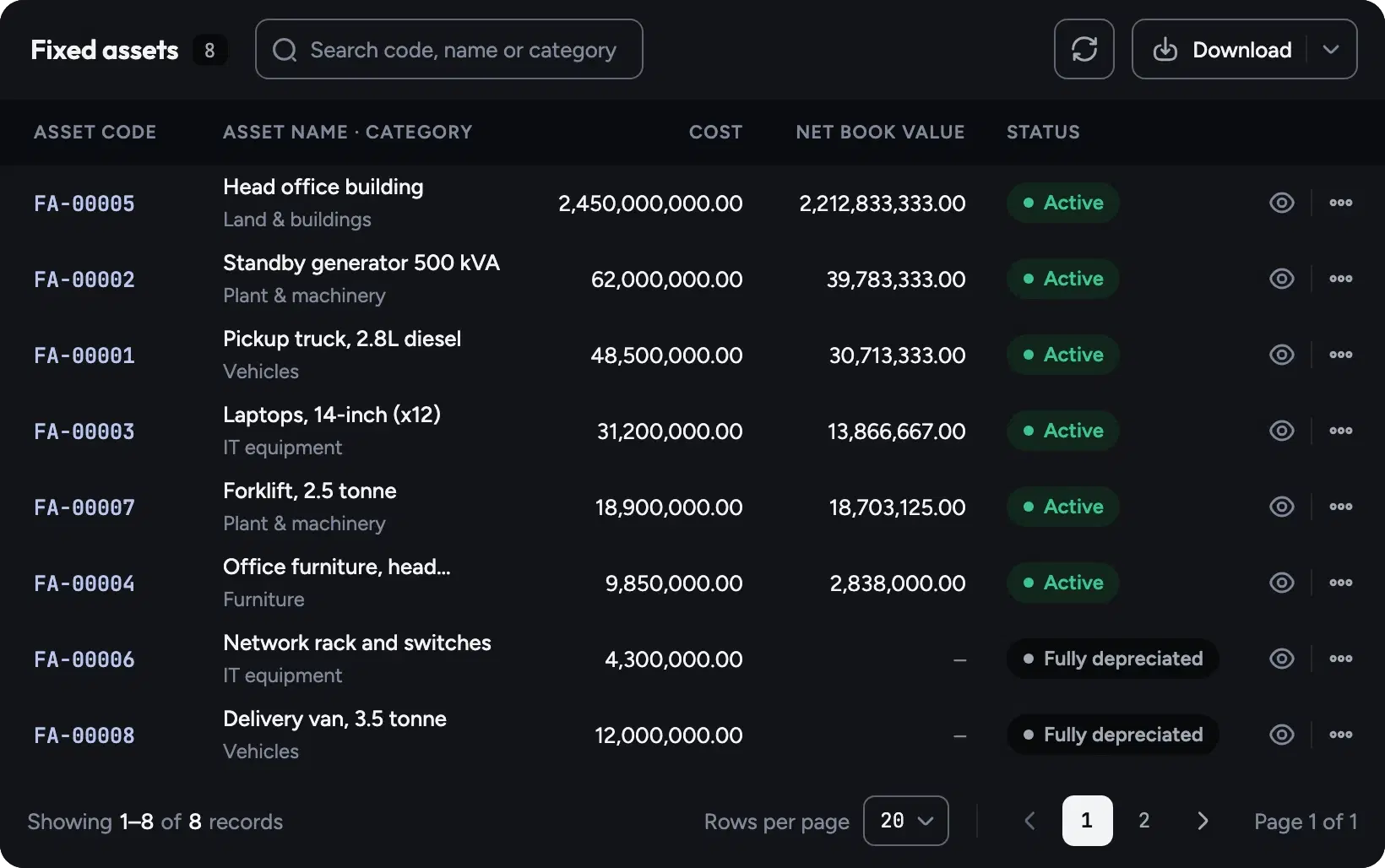
An asset register with cost, accumulated depreciation and net book value for every asset, a depreciation schedule worked out from the method you choose, and depreciation journals posted to your ledger in one run.
Register assets one at a time, or upload your whole register from a template.
Licensed, regulated and certified in Nigeria
NRS-approved e-invoicing provider
Nigeria Revenue Service
NITDA licensed
Responsible data management
NDPC compliant
Nigeria Data Protection Act 2023
The old way
Asset problems that only show up at year end
If any of these sound familiar, your asset register is being kept beside the books instead of inside them.
01
The register is a spreadsheet nobody trusts.
Someone updates it when they remember, and the figures never quite match the ledger.
02
Depreciation is worked out by hand.
Every month or year someone recalculates it, then types the journal in again.
03
Nobody knows what an asset is worth now.
Cost is easy to find. Net book value means opening three files and a calculator.
04
New assets go in without a second look.
One person adds the asset and posts it, and nobody checks it until the auditors do.
Why Qorpy Fixed Assets
An asset register that keeps itself in the books.
Every asset, its depreciation and its journals, on the same ledger as the rest of your business.
01Register
Every asset, with what it cost and what it is worth now
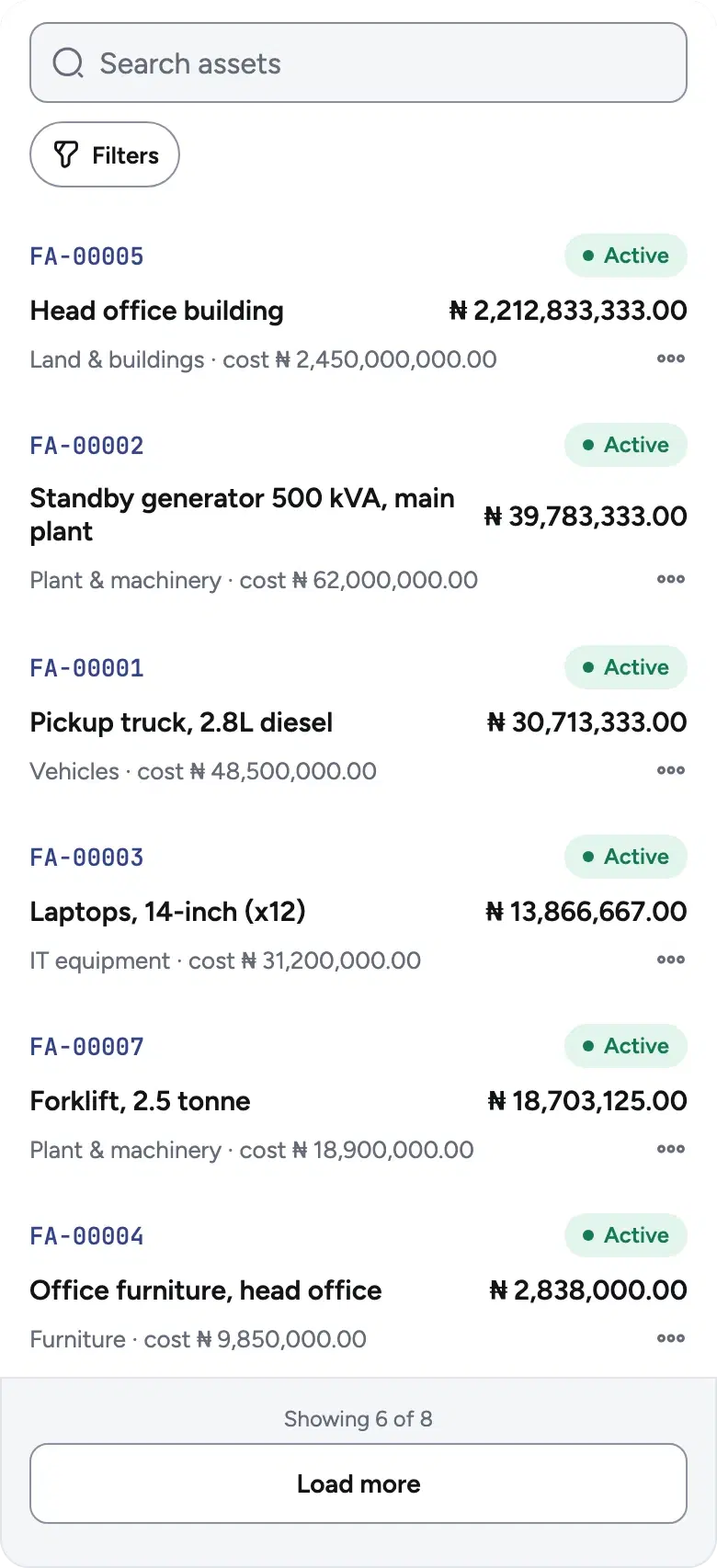
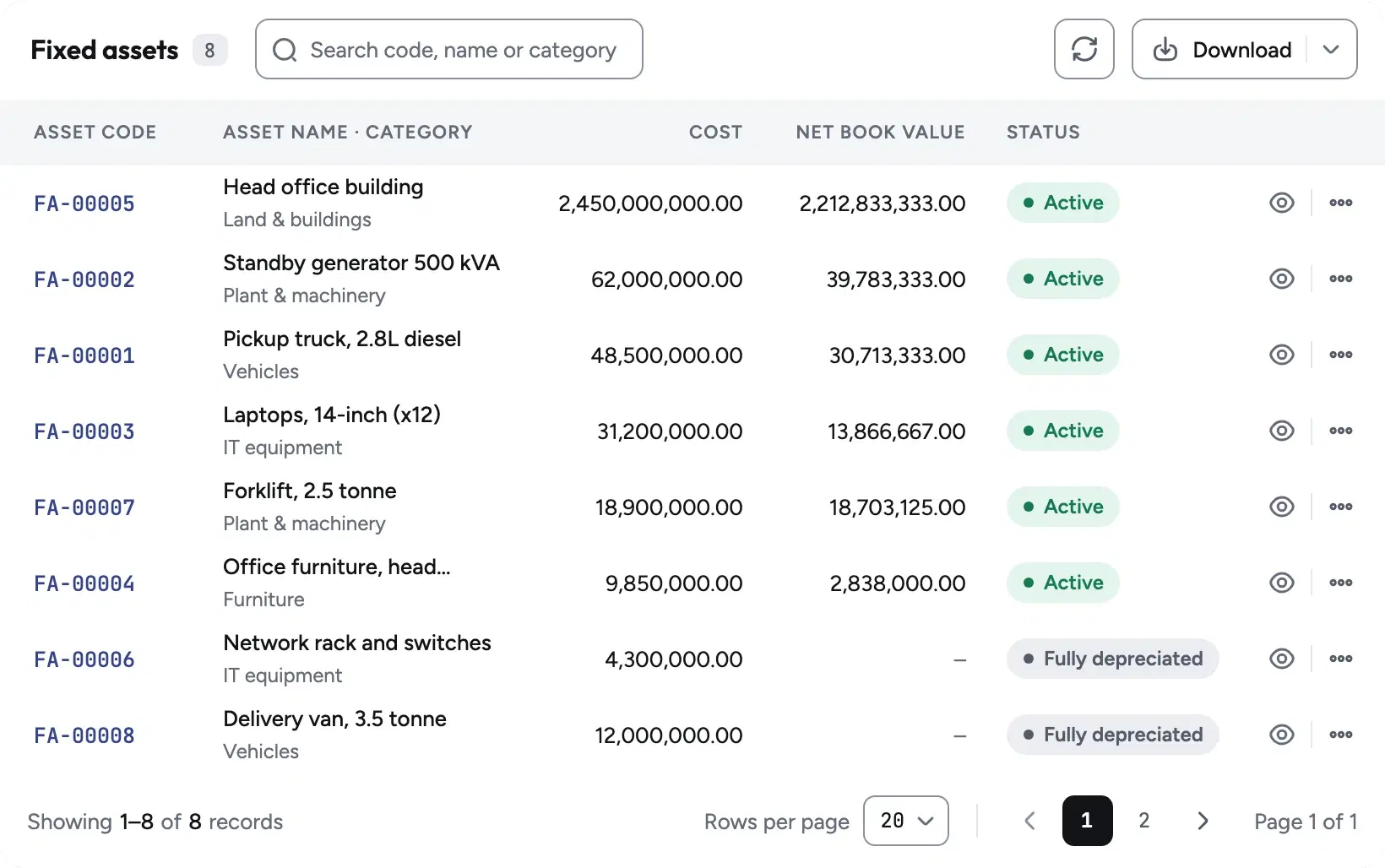
Register each asset with its category, cost, acquisition date and how it was paid for. The register shows its accumulated depreciation, net book value and status, and categories fill in the method, useful life and residual value for you.
Categories with default method, useful life and residual value
Asset, depreciation expense and accumulated depreciation accounts per category
Bulk upload up to 200 assets from a template
02Depreciation
A depreciation schedule for every asset
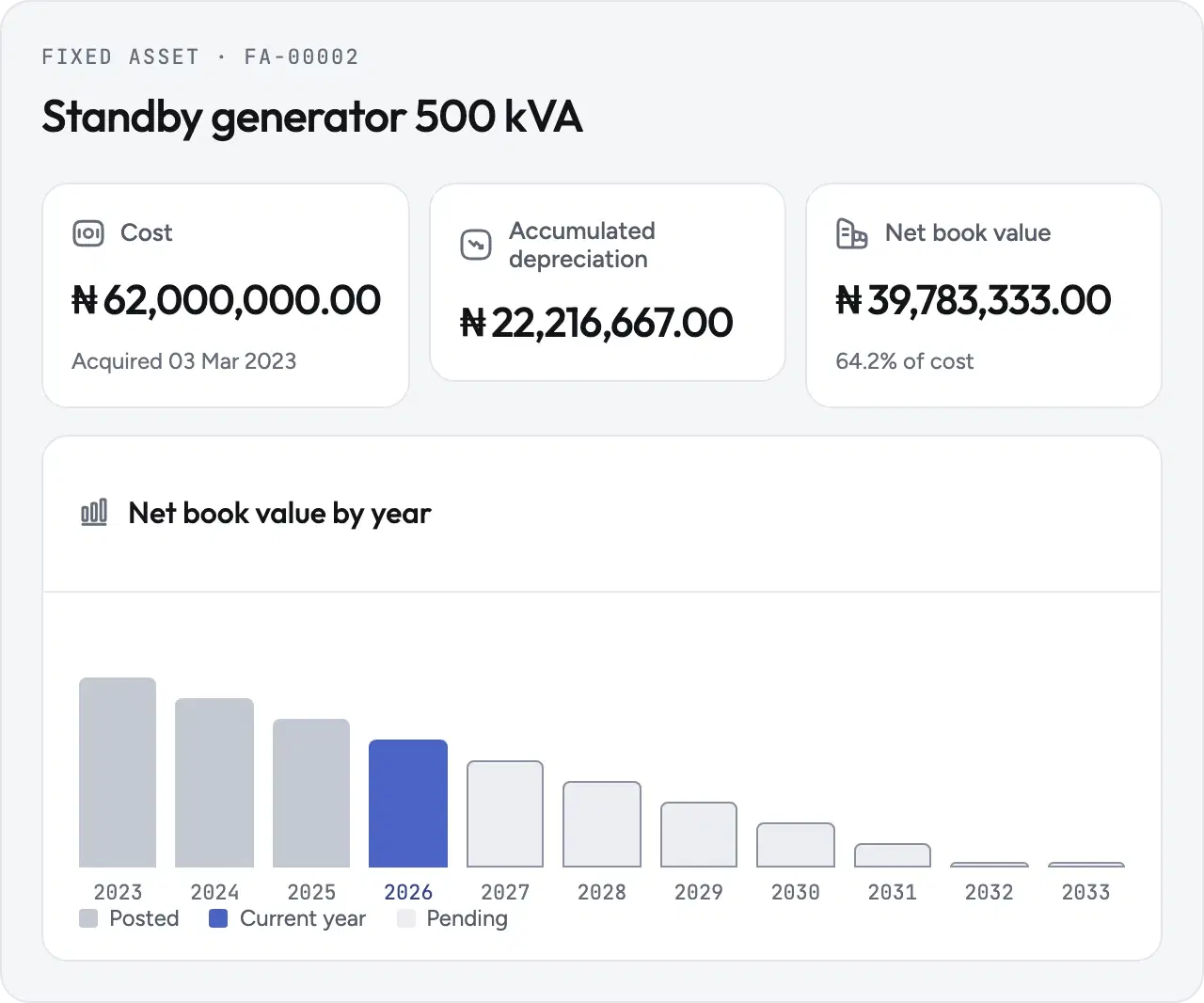
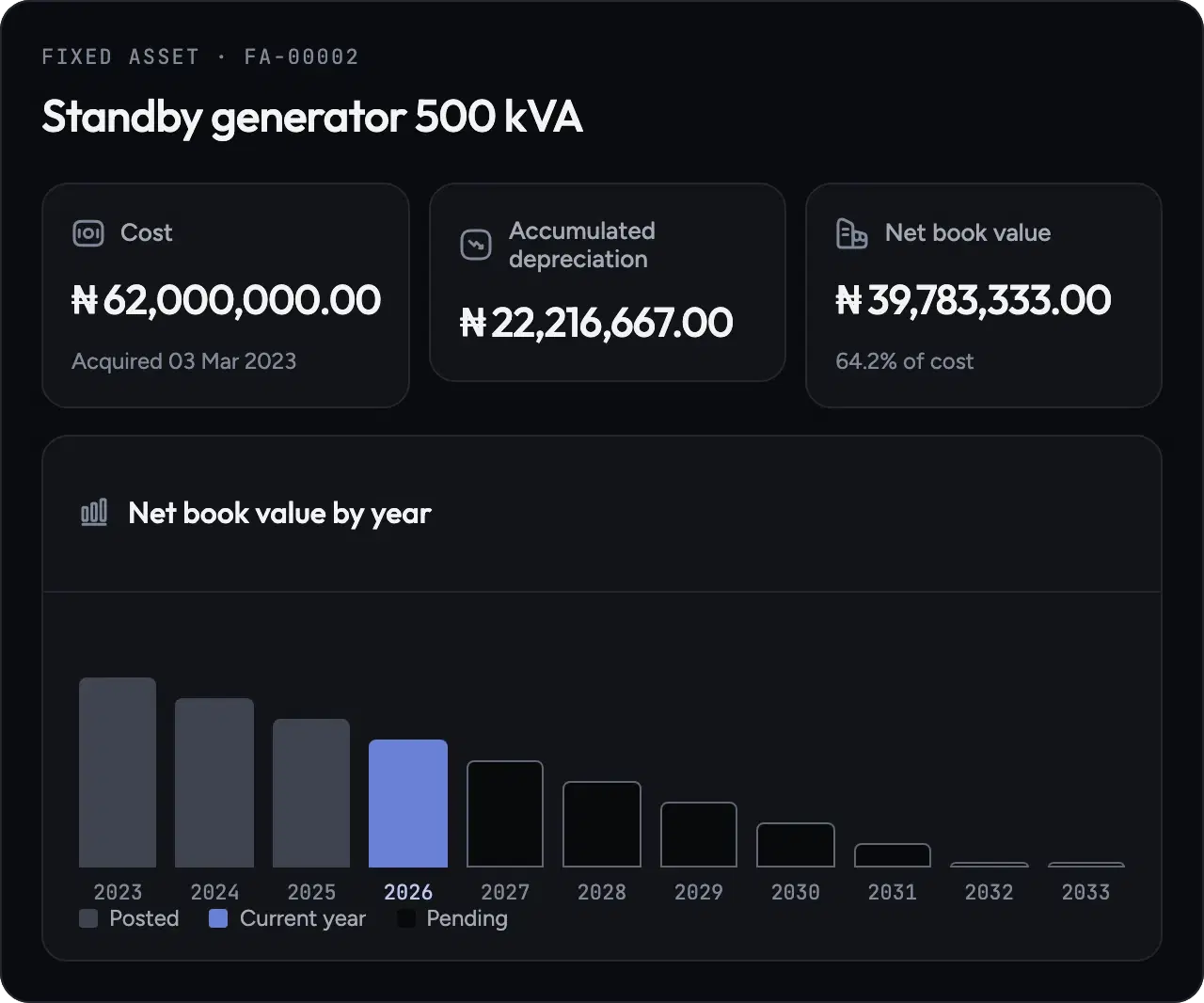
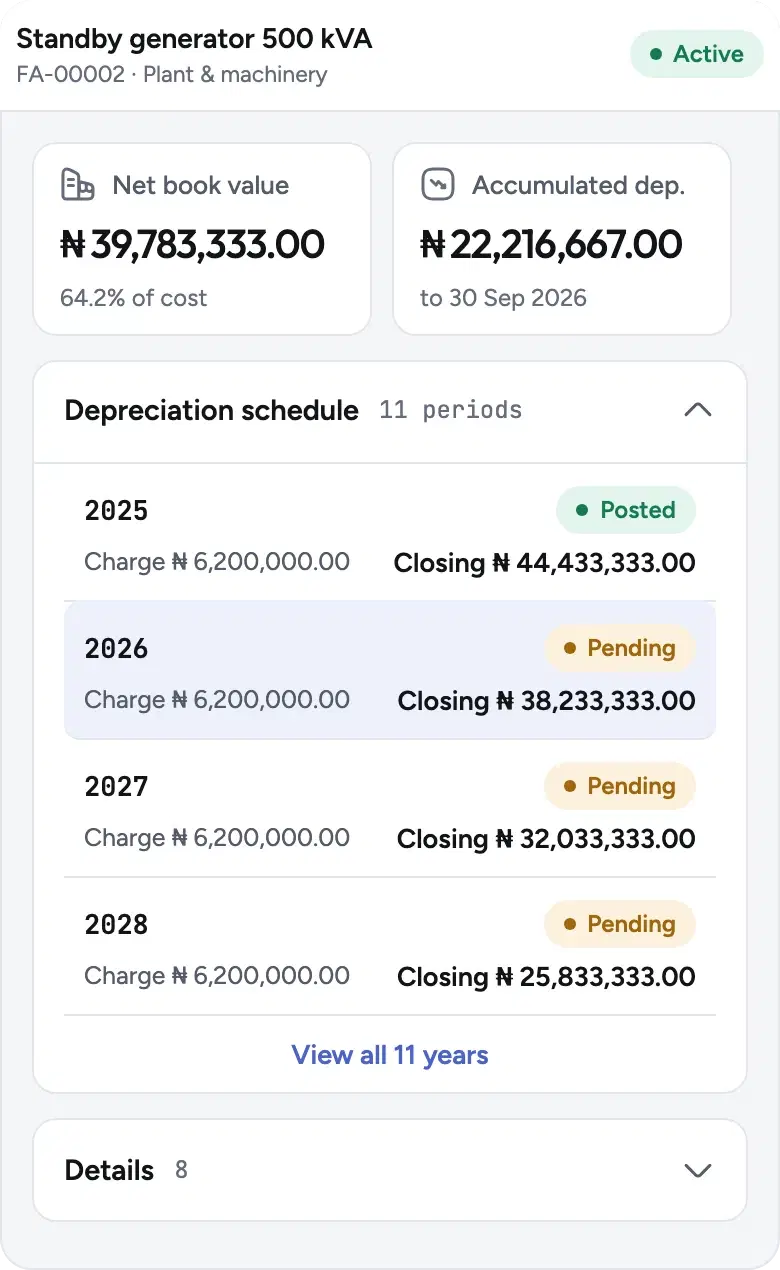
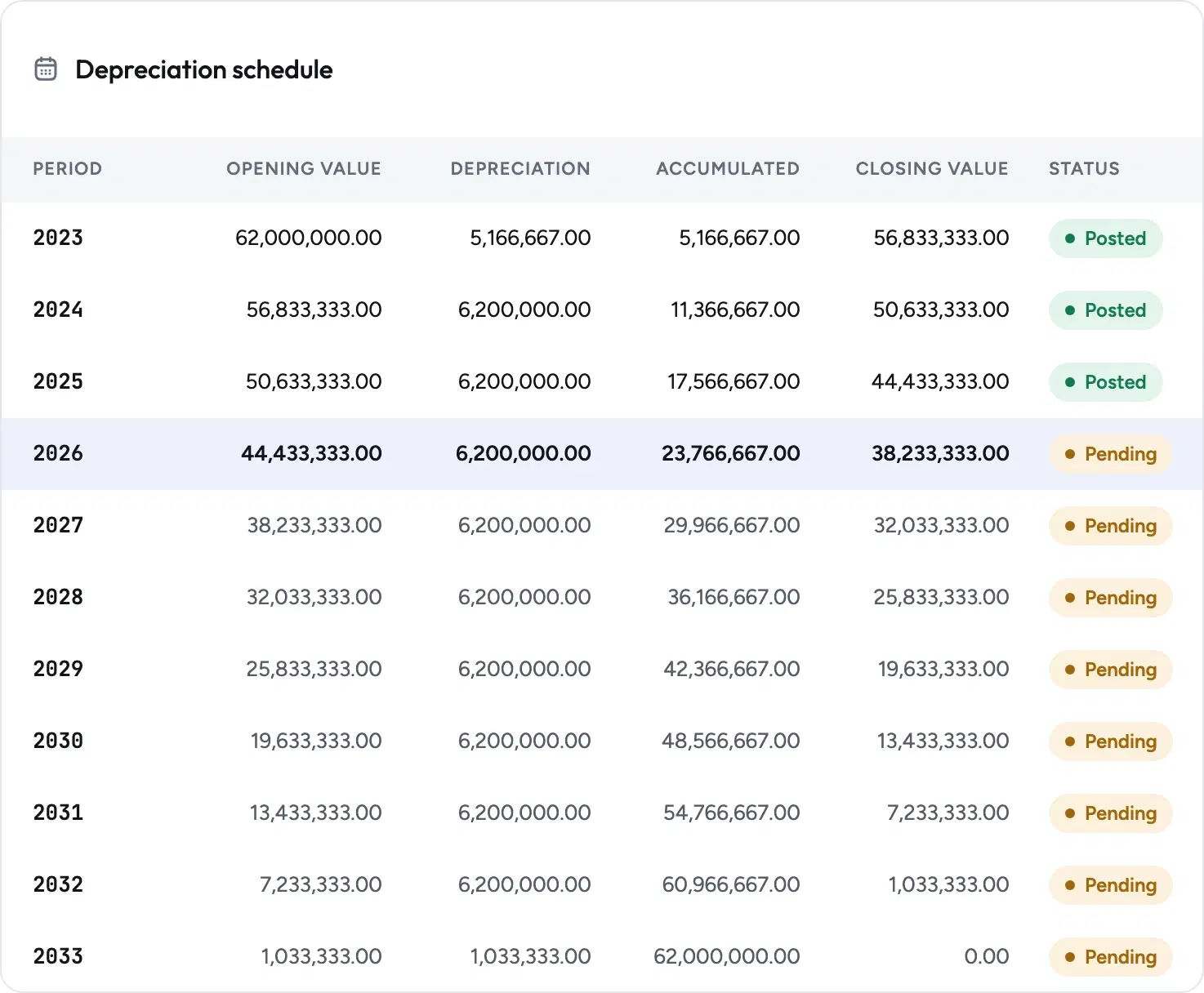
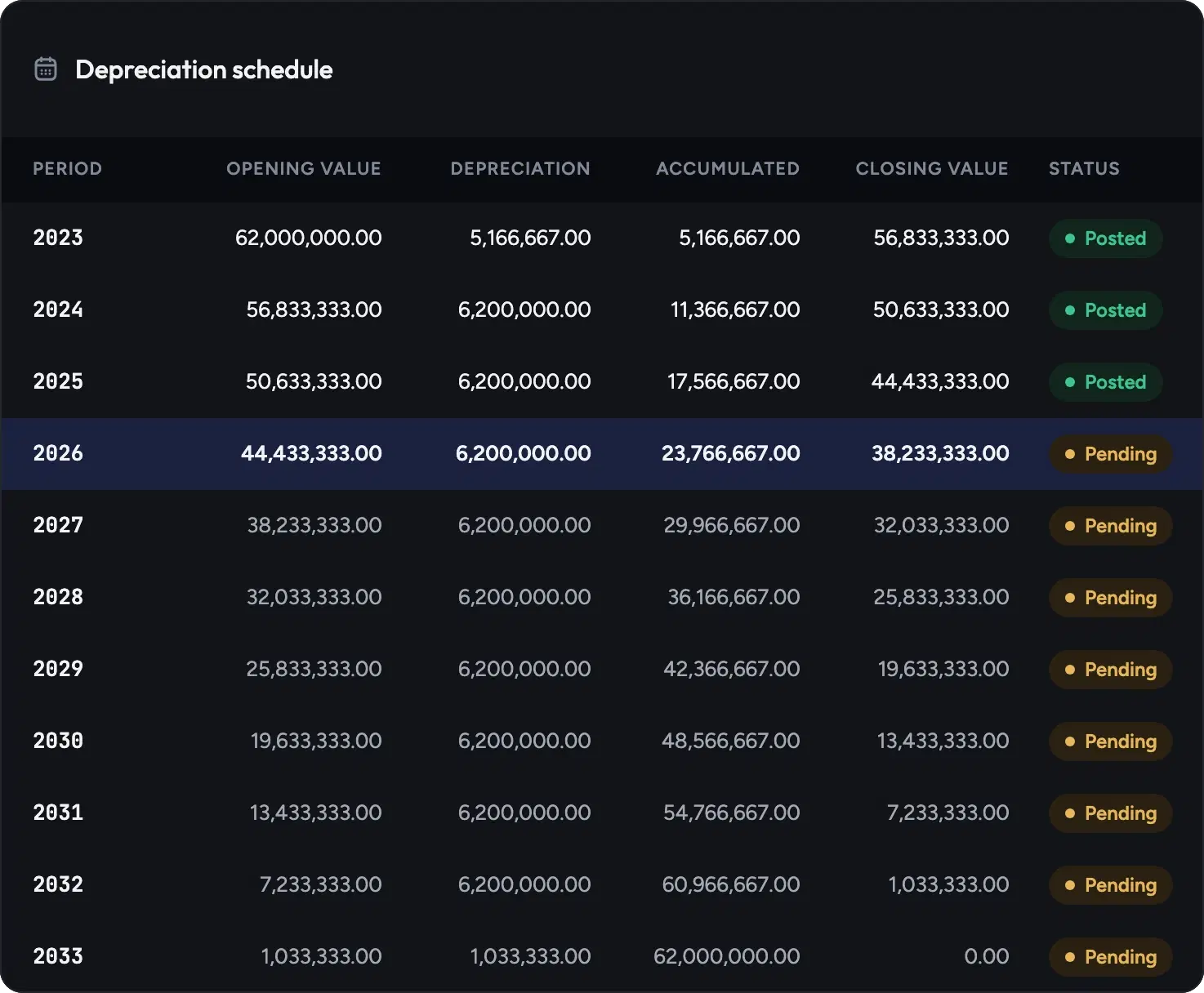
Open any asset to see its schedule period by period, with the opening value, depreciation and closing value, and a chart of its net book value at the end of each year. Posted periods link to the journal entry that recorded them.
Straight line or reducing balance
Net book value by year, posted and pending
Acquisition and depreciation journals one click away
03Depreciation run
Post the period's depreciation in one run
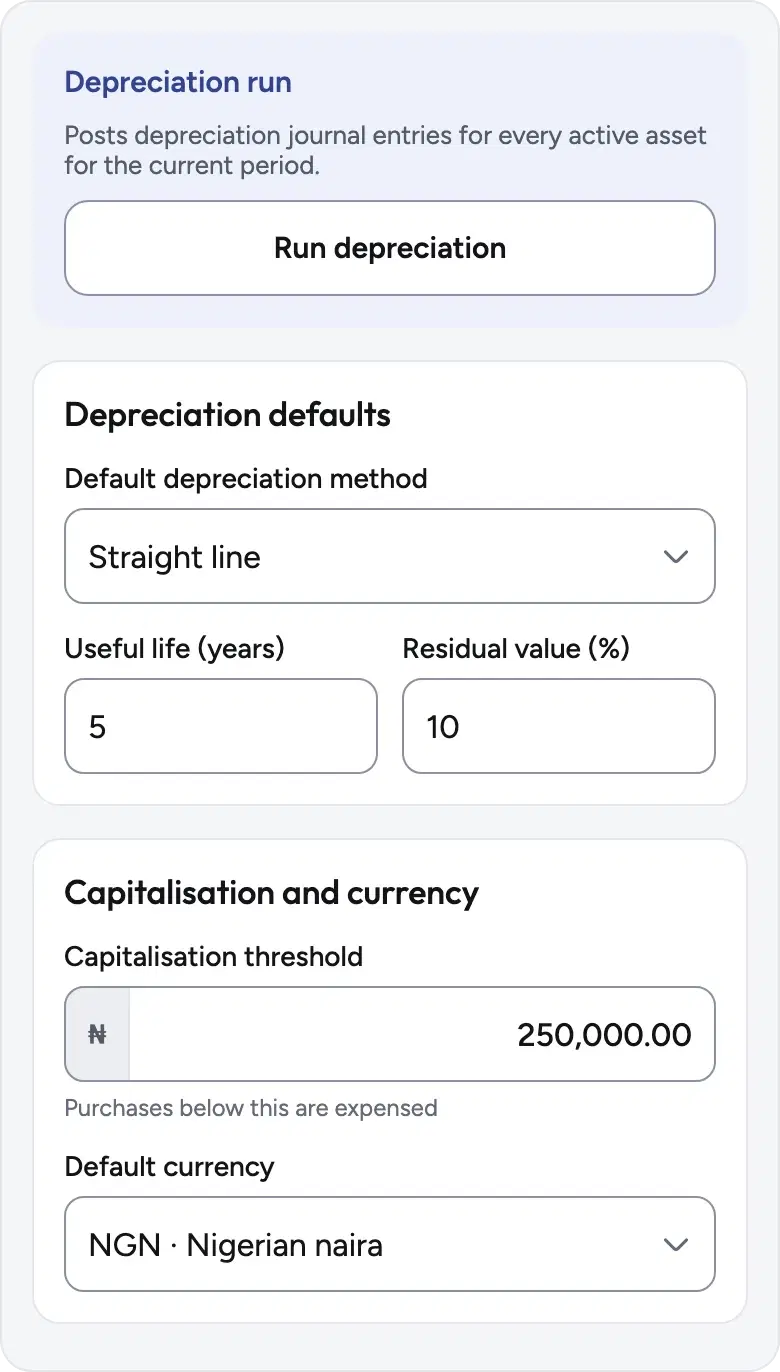
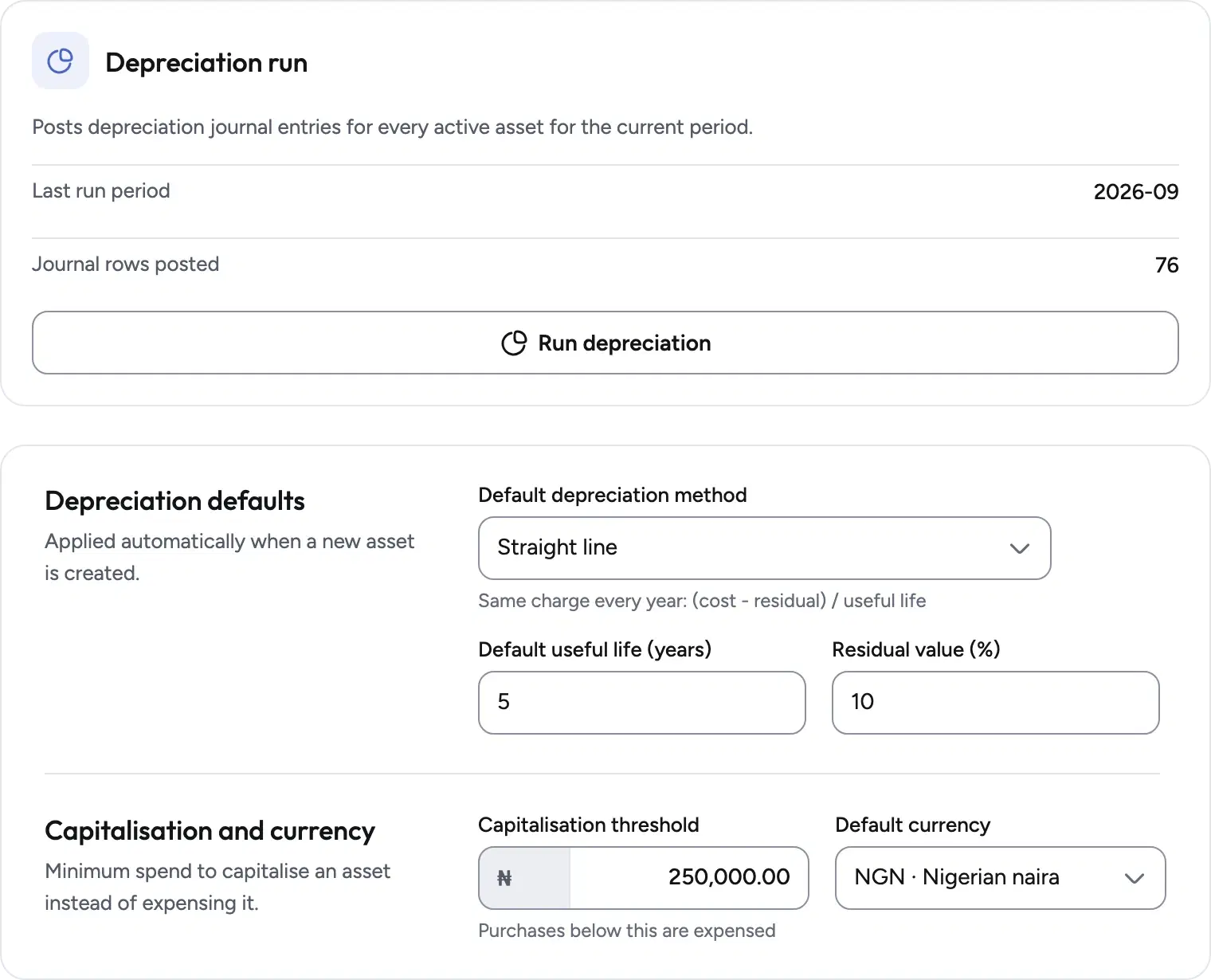
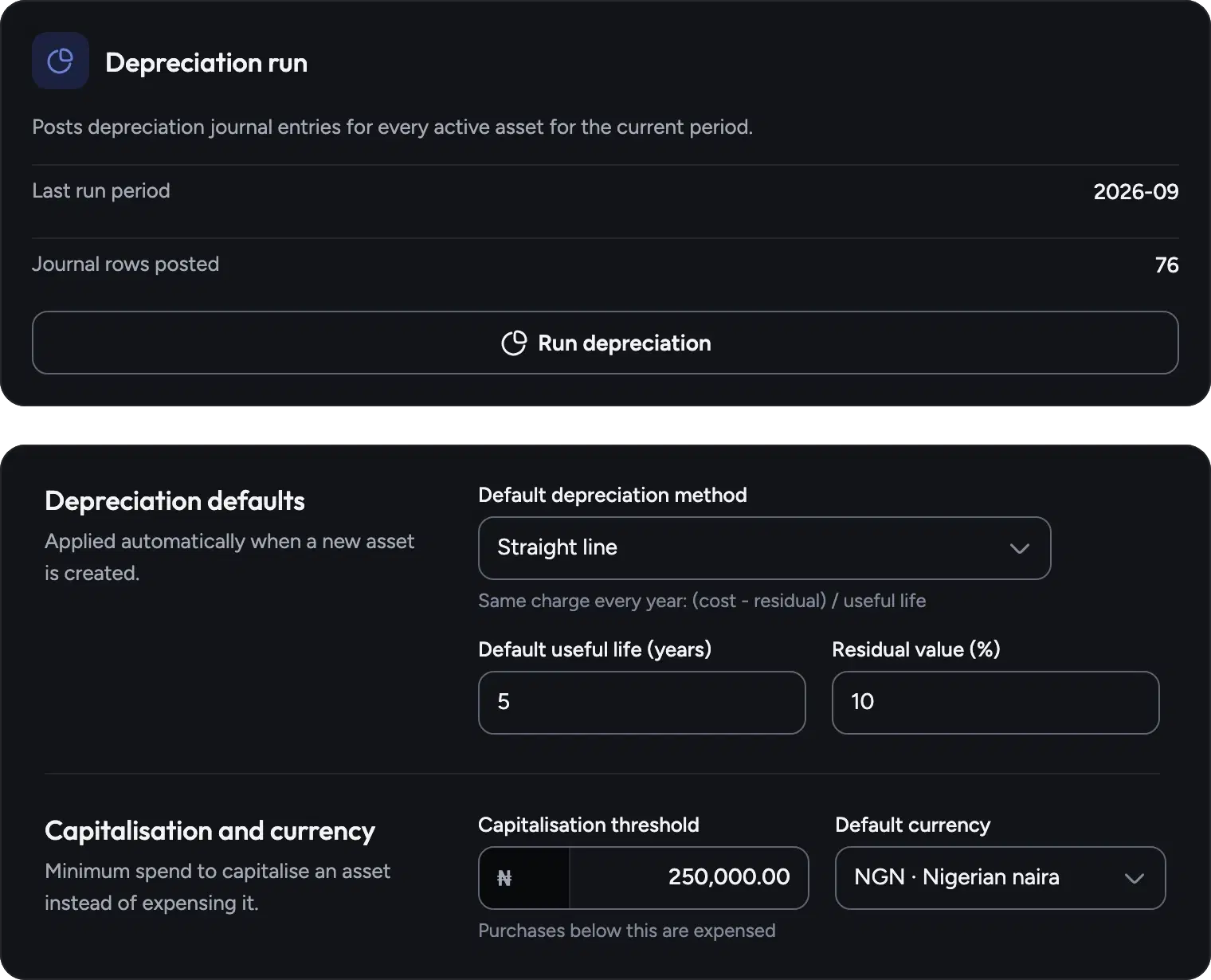
Set your defaults once: depreciation method, useful life, residual value, capitalisation threshold and currency. When the period ends, run depreciation and Qorpy posts the journal entries for every active asset.
Defaults applied to every new asset
Capitalisation threshold for what gets expensed
One run posts journals for every active asset
What is included
Every item below is live in Fixed Assets today
In the module
01
Asset register
Cost, accumulated depreciation, net book value and status for every asset.
02
Asset categories
Default method, useful life, residual value and ledger accounts per category.
03
Depreciation schedule
Period by period, with links to the posted journals.
04
Depreciation run
Posts depreciation journals for every active asset for the current period.
05
Authorization queue
Requests wait for an approver, and the maker cannot approve their own.
06
Bulk upload
Assets and categories from a downloadable template.
Getting started
From sign-up to your first depreciation run
Four steps, in order. Most teams get through all four in an afternoon.
1
Create your account
Sign up in under two minutes and choose your industry and business size.
2
Set your categories and defaults
Add asset categories with their ledger accounts, and set your default method and useful life.
3
Register your assets
Add them one at a time or upload your existing register from a template.
4
Run depreciation
Post the period's depreciation journals for every active asset in one run.
Enterprise grade security
Security & compliance, built in.
Licensed, regulated, and built to the highest standards, so you can focus on running your business.
NITDA Licensed
Recognised by Nigeria's foremost digital regulator, confirming that our platform meets the required standards for responsible data management.
NRS Approved Service Provider
Vetted and approved by the Nigeria Revenue Service to power e-invoicing workflows that meet the latest tax reporting mandates.
NDPC Compliance
Every piece of data you share with us is handled under the strict provisions of the Nigeria Data Protection Act 2023. Your privacy is non-negotiable.
Licensed and Regulated
We operate under full regulatory oversight, holding the necessary permits and licences to provide compliant digital invoicing services across Nigeria.
Cybersecurity Standards
Our infrastructure is hardened against modern threats, aligned with Nigeria's national cybersecurity framework and industry best practices for data integrity.
Continuous Monitoring & Support
Round-the-clock system monitoring and a dedicated support team keep your operations uninterrupted and your compliance posture current.
Before you switch
The three things people ask before they switch
Answered here rather than on a sales call, because you should not have to book a meeting to find out whether something fits.
Can someone check assets before they count?
Yes. Fixed Assets has its own authorization queue. Requests that need sign-off wait there for an approver, and the person who made a request cannot approve it themselves.
What happens to my data if we leave?
You retain all rights to the data your organisation submits, and you can export it. The terms are set out in our Terms of Service.
Is our data actually secure?
AES-256 encryption at rest, TLS in transit, role-based access and automated backups, with each organisation's data logically isolated.
FAQ
Frequently asked questions
Can't find your answer? Reach out to our team and we'll get back to you within an hour.
Straight line, which charges the same amount every year, and reducing balance, which charges a fixed rate of the remaining book value. You set a default, each category can have its own, and each asset can override it.
Yes. Download the template, fill in up to 200 assets with their category, cost and acquisition date, and upload it. Categories have their own template too.
Run depreciation from Fixed Assets settings. It posts depreciation journal entries for every active asset for the current period, and a run cannot be undone. Posted periods in an asset's schedule link to their journal entry.
The minimum spend to capitalise an asset instead of expensing it. Purchases below it are expensed.
The default currency for fixed assets can be naira, US dollar, British pound or euro.
Acquisitions and depreciation post to the ledger in Accounting, using the accounts set on each category, and an asset paid by bank names the bank account it was paid from.
Get started
Know what every asset is worth.
Upload your register, set your defaults and run your first depreciation the same day. Or book a demo and we will walk through it with you.